Free wedding seating chart maker
Wedding seating chart: alphabetical or by table?
Alphabetical charts are faster to read; by-table charts are nicer to look at and show who you are sitting with. Which one is right depends mostly on how many guests will be reading it at the same time. This guide gives the trade-off by guest count, explains how guests actually scan a chart, and shows how to have both without doing the work twice.
Alphabetical or by table: the short answer
Under about 60 guests, list by table. Everyone can read a dozen short lists in a few seconds, and seeing the other names at the table is part of the pleasure. Over about 100 guests, go alphabetical by surname with the table number beside each name. Between the two, decide by how many guests do not know each other: a wedding where two families and two friend groups barely overlap benefits from alphabetical, because people cannot guess which table they would be on.
The reason is the queue. A seating chart is read by most of your guests in the same ten minutes, between the ceremony and sitting down. Anything that doubles the time each person spends in front of it doubles the length of the queue behind them.
How guests actually read a seating chart
With a by-table chart, a guest who does not know their table has to read the lists one by one until their name appears. On average they read half the chart; the unlucky ones read all of it. With an alphabetical chart they go straight to their initial and read a handful of names. Alphabetical is the only layout where reading time barely grows with the guest count.
By-table charts also fail quietly when two guests share a surname, when a friend has been seated with people they do not recognise, or when a guest cannot remember which side of the room Table 7 is. Alphabetical charts fail when a guest looks under the wrong name: a married name versus a maiden name, or a first name because the chart happens to be sorted that way.
Wedding seating chart by last name or first name
Sort by surname and print it first (Shah, Priya) or in bold, so the sort order is obvious at a glance. Sorting by first name feels friendlier but is slower to use, because guests do not scan for first names in a list.
List every adult individually, even couples who share a surname, unless the chart is very tight for space. A couple with different surnames gets two lines, each with the same table number, so neither has to find the other's name. Children can be listed under a parent as 'and family' on the poster but should appear individually in the table list the venue works from, because they need a seat and often a different meal.
Escort cards vs seating chart
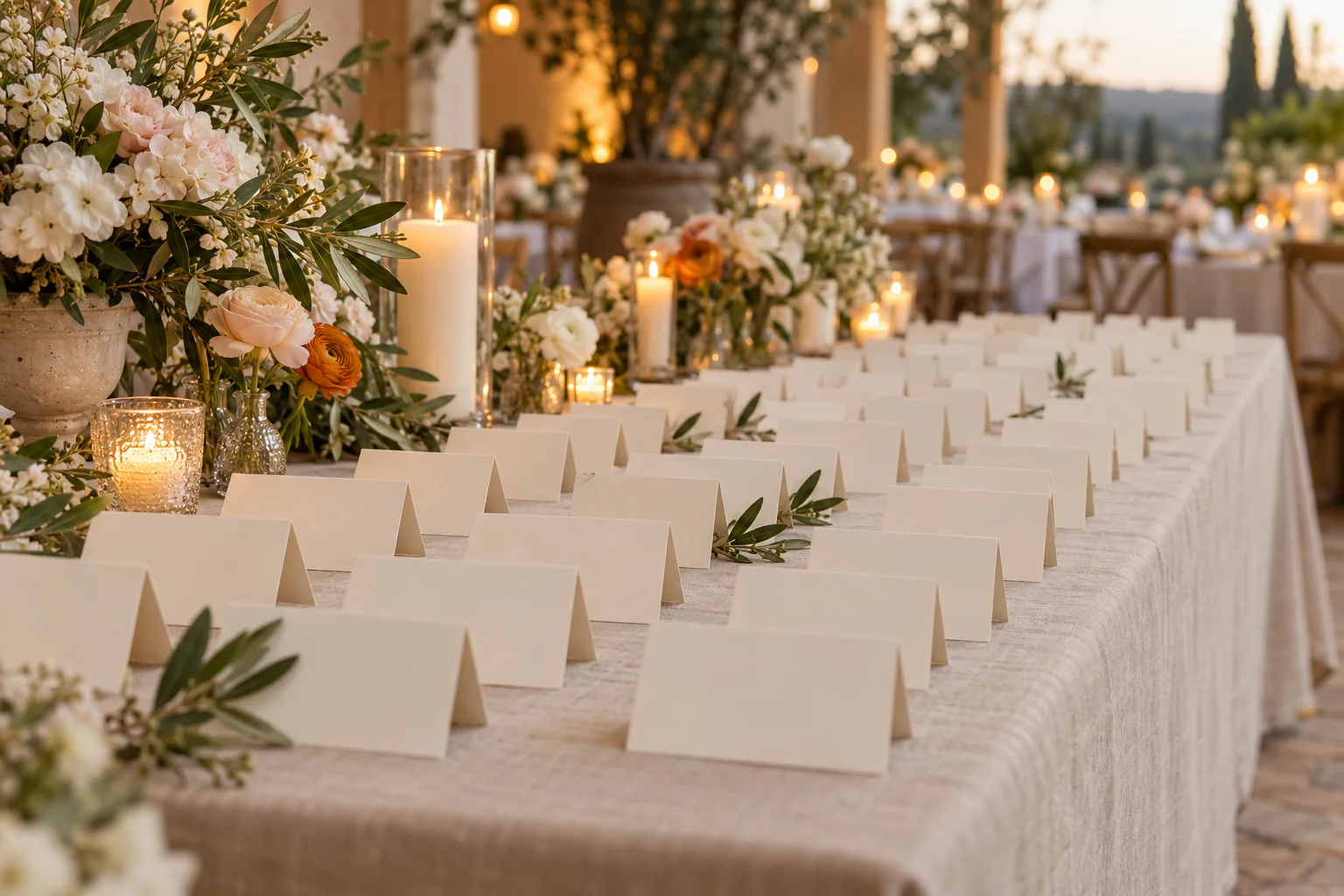
Escort cards are small tented cards, one per guest or per couple, laid out alphabetically on a table at the entrance; each card carries the name and the table number, and guests take it with them. Because they are a physical alphabetical list, they read as fast as an alphabetical chart, and they can double as a meal marker for the serving staff if you colour-code or mark them. Place cards are the cards at each seat, which assign a chair rather than a table.
A chart is one object to print and stand on an easel, costs less than a hundred cards, and needs no table and no one to lay it out. Cards tolerate last-minute changes better: rewriting one card is easier than reprinting a poster. Many couples use a chart for the table and place cards for the seat, and skip escort cards entirely. If you are unsure, the deciding factor is usually who will set up the room on the morning: cards need twenty minutes of someone's time.
How to do both: alphabetical chart plus table lists
The alphabetical versus by-table debate is only a dilemma if you are laying out the poster by hand. If the names and table numbers live in a list, both layouts are a print option. The free Seating Plan planner, for example, produces the poster in either layout from the same seating, plus a separate alphabetical list, a table-by-table list and fold-over place cards in its print pack, so the entrance can show one view and the venue staff can hold the other.
A practical combination for 100 or more guests: alphabetical poster at the entrance, a table-by-table list taped behind the bar and at the venue coordinator's station, and place cards on the tables. For under 60 guests: by-table poster, and the same table list for the caterer with meals and allergies on it.
Handling last-minute seating chart changes
Whatever layout you choose, expect two or three changes in the final week. Keep the chart editable until you send it to print, finish the poster only after the venue has your final numbers, and give the coordinator a printed table list with a pen. If a guest cancels on the day, leave the name on the poster and update the catering list.
Free wedding seating chart maker
Paste your guest list, drag people onto tables, let the planner seat the rest. Everything stays in your browser. Print the chart when it's final.
Wedding seating chart questions
- Should a wedding seating chart be alphabetical?
- For about 80 guests or more, yes. Alphabetical by surname is the fastest layout to read in a queue. Smaller weddings can list guests by table.
- How do you alphabetise a wedding seating chart?
- Sort by surname, list each adult individually with their table number, and put couples with different surnames on separate lines. Use the name on the invitation.
- Do you put Mr and Mrs on a seating chart?
- Only if the wedding is formal and you have used titles on the invitations. Most charts use full names without titles; it is shorter and avoids mistakes.
- Do you need a seating chart if you have escort cards?
- No. Escort cards are already an alphabetical list with table numbers. You still need a table-by-table list for the venue and caterer.